The Difference Between GAMCA and a Regular Medical Check-up
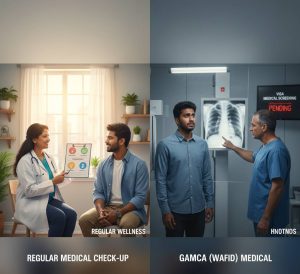
Medical examinations serve different purposes depending on their context. While a regular medical check-up focuses on personal health monitoring and preventive care, a GAMCA medical examination is a mandatory requirement for individuals applying for employment visas to certain Gulf countries. Despite both involving health assessments, their objectives, scope, standards, and outcomes differ significantly. Understanding these differences is essential for visa applicants, employers, and recruitment agencies.
What Is a GAMCA Medical Examination?
GAMCA (Gulf Approved Medical Centers Association) medical examination is a pre-employment health screening required for individuals seeking work visas for specific GCC countries. The test must be conducted only at GAMCA-approved medical centers, and the results are digitally linked to the visa processing system of the destination country.
The primary purpose of GAMCA Medical is not treatment or diagnosis but fitness certification. It ensures that foreign workers entering GCC countries do not pose public health risks and are medically fit to perform their job roles.
What Is a Regular Medical Check-up?
A regular medical check-up is a voluntary health assessment conducted for personal well-being, early disease detection, or routine monitoring. It is usually performed at hospitals, clinics, or diagnostic centers of the patient’s choice and is customized based on age, lifestyle, medical history, and individual concerns.
Unlike GAMCA, a regular medical check-up is patient-centric, confidential, and focused on long-term health management rather than immigration compliance.
Difference in Purpose and Objective
The most fundamental difference between GAMCA and a regular medical check-up lies in their purpose.
A GAMCA medical examination is conducted strictly for visa and immigration clearance. The outcome is binary—fit or unfit—and directly affects whether a candidate is eligible to work in a GCC country.
In contrast, a regular medical check-up aims to:
- Monitor overall health
- Detect early signs of illness.
- Provide medical advice or treatment.
- Support preventive healthcare
There is no concept of “fitness for travel or employment” in a routine check-up unless specifically requested.
Difference in Medical Standards and Criteria
GAMCA medical examinations follow uniform, government-mandated standards set by GCC health authorities. These standards focus primarily on:
- Communicable diseases
- Occupational fitness
- Public health safety
Even minor abnormalities that are acceptable in a regular medical context may lead to an unfit status under GAMCA rules.
Regular medical check-ups, on the other hand, are flexible. Test results are interpreted clinically, and abnormal findings typically lead to further evaluation or treatment—not rejection or disqualification.
Difference in Tests Conducted
GAMCA Medical Tests Typically Include:
- Blood tests (including infectious disease screening)
- Chest X-ray
- Urine analysis
- Physical examination
- Vision and hearing assessment (job-dependent)
The test panel is fixed and cannot be modified based on personal preference.
Regular Medical Check-up Tests May Include:
- Complete blood count
- Lipid profile
- Blood sugar levels
- Liver and kidney function tests
- ECG, ultrasound, or other diagnostics (optional)
These tests are customizable and often broader in scope than GAMCA examinations.
Difference in Reporting and Confidentiality
GAMCA medical reports are digitally uploaded and shared with immigration and embassy systems. The applicant does not have full control over the report, and detailed findings may not be disclosed if the status is marked unfit.
Regular medical check-ups maintain strict doctor–patient confidentiality. Reports are provided directly to the patient, who can seek second opinions or treatment without external reporting obligations.
Difference in Choice of Medical Center
For GAMCA medical examinations:
- Applicants must visit GAMCA-approved centers only.
- Results from non-approved clinics are invalid.
- Appointments and reporting are centrally monitored.
For regular medical check-ups:
- Patients are free to choose any hospital or diagnostic center.
- No government or embassy approval is required.
- Reports are valid solely for personal or clinical use.
Difference in Legal and Immigration Impact
GAMCA medical results carry legal and immigration consequences. An unfit result can:
- Delay or cancel visa processing
- Lead to temporary or permanent ineligibility.
- Be recorded in centralized medical databases.
A regular medical check-up has no legal impact. It does not affect travel, employment, or visa eligibility unless the individual voluntarily discloses the information.
Cost and Validity Differences
GAMCA medical examinations have:
- Fixed pricing regulated by authorities
- Limited validity, usually linked to visa timelines.
Regular medical check-ups vary in cost depending on:
- Test packages selected
- Healthcare provider
- Additional consultations
Their reports typically have no formal expiry unless required for specific purposes.
Summary of Key Differences
| Aspect |
GAMCA Medical |
Regular Medical Check-up |
| Purpose |
Visa and employment clearance |
Personal health monitoring |
| Mandatory |
Yes (for specific visas) |
No |
| Medical Centers |
GAMCA-approved only |
Any licensed clinic |
| Outcome |
Fit / Unfit |
Diagnostic findings |
| Confidentiality |
Limited |
Full |
| Legal Impact |
High |
None |
Conclusion
While both GAMCA medical examinations and regular medical check-ups involve health assessments, they serve entirely different functions. GAMCA medical is a regulatory requirement designed to protect public health and ensure workforce fitness in GCC countries. In contrast, regular medical check-ups are focused on individual well-being and preventive healthcare.
Understanding these differences helps applicants prepare appropriately and avoid confusion during the visa process. Choosing the correct type of medical examination based on purpose is essential for both compliance and personal health management.