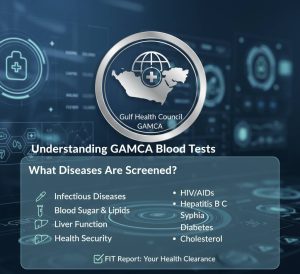
Understanding Blood Tests: What Diseases Are Screened?
Blood tests are a crucial part of the GAMCA medical examination, especially for individuals applying for employment or residency in GCC countries such as Saudi Arabia, UAE, Kuwait, Qatar, Oman, and Bahrain. Many applicants often ask, “What diseases are checked in GAMCA blood tests?” Understanding the screening process helps reduce anxiety and ensures proper preparation.
This article explains the diseases screened through blood tests, why they are tested, and what it means for expatriate eligibility.
Why Are Blood Tests Mandatory for GCC Medical Exams?
Blood tests are conducted to protect public health and prevent the spread of communicable and chronic diseases across borders. GCC countries follow strict health regulations to ensure that expatriates entering the workforce are medically fit.
Common Diseases Screened in GAMCA Blood Tests
The following diseases are routinely screened during GAMCA blood tests:
HIV (Human Immunodeficiency Virus)
HIV screening is mandatory for all applicants. A positive result usually leads to medical unfitness, as per GCC health regulations.
Hepatitis B
Hepatitis B is a viral liver infection. Blood tests check for active or chronic infection, which may affect visa approval depending on the country and job category.
Hepatitis C
Hepatitis C screening is compulsory. A positive result may lead to visa rejection in most GCC countries.
Syphilis
Syphilis is a sexually transmitted infection tested through blood screening. Early detection is essential to prevent public health risks.
Additional Blood Tests (Country or Job-Specific)
In some cases, additional blood tests may be required depending on:
- Destination country
- Nature of employment (healthcare, food handling)
These may include:
- Blood sugar (diabetes screening)
- Liver function tests
- Kidney function tests
These tests help assess overall fitness but usually do not result in automatic rejection unless medically severe.
Do Blood Tests Require Fasting?
For standard GAMCA blood tests, fasting is usually not required. Tests for HIV, Hepatitis, and Syphilis are not affected by food intake. However, if additional metabolic tests are included, the medical center may advise short fasting.
What Happens If a Disease Is Detected?
If a blood test result shows a medical condition:
- The medical center uploads the result to the Gamca system.
- The applicant is marked fit or unfit based on GCC guidelines.
- Re-tests or specialist evaluations may be required in rare cases.
Final decisions depend on the destination country’s health authority.
Accuracy and Reliability of GAMCA Blood Tests
All tests are conducted at GHC-approved medical centers using standardized laboratory procedures. Results are digitally uploaded, minimizing errors and fraudulent reporting.
Applicants can also check their GAMCA medical status online using their passport number.
Tips to Prepare for Blood Tests
To ensure smooth testing:
- Stay hydrated
- Avoid alcohol for at least 48 hours.
- Get proper rest
- Inform the doctor about existing medical conditions.
Conclusion
Understanding what diseases are screened for in GAMCA blood tests helps applicants prepare confidently for their medical examination. The screening primarily focuses on infectious diseases such as HIV, Hepatitis B & C, and Syphilis to protect public health across GCC countries. By attending an authorized medical center and following preparation guidelines, applicants can ensure a hassle-free medical process.